
HOLIDAY SEASON: Save up to 50% and get up to $90 BTC on the best deals of the year

Shop now


$

%
Rank
Price $ %
Volume(24h) $
Market cap $

PRICE USD CHART

price today

The price of () today is $, which has a variation of % over the last 24 hours. The 24 Hour Trading Volume of is $

Market Cap

The current Market Cap ranking of is #, with a live market cap of $.

What is the all time high?

hit an all time high of $.

With a price of $ today, () is % from all time high.

What is the all time low?

had an all time low of $.

With a price of $ today, () is % from all time low.

Frequently Asked Questions

EOS, also known as EOSIO, is an open-source blockchain protocol that enables the development of decentralized applications (dApps). The primary aim of EOS is to offer scalability—a limitation of many legacy blockchain platforms like Ethereum— and enable the easy development of user-friendly dApps. 


To achieve its goal of providing high throughput, EOS uses a Delegated Proof of Stake (DPoS) consensus mechanism, which allows it to offer high performance without compromising the security of blockchain. However, it’s important to note that the protocol trades off complete decentralization and censorship resistance for scalability and security.


The native token of the EOS blockchain is called EOS. The EOS network has adopted a novel resource model for its ecosystem and stakeholders, which requires the staking of EOS tokens. This allows developers to use and receive RAM, CPU, voting rights, computational and storage capacity, and network bandwidth. 


EOS is different from other native tokens as it’s not used as a fee for transactions. Instead, developers need to buy and stake EOS as a payment to the blockchain to perform computations.

The goal of EOS is to function as an operating system that provides services such as cloud storage, user authentication, and server hosting. This is because doing so makes building decentralized applications streamlined and user-friendly. In addition to its delegated Proof of Stake (DPoS) consensus mechanism, EOS uses the following technologies to boost performance:

  • Graphene technology – This is an open-source software toolkit that primarily assists in boosting the transaction processing capabilities. 
  • Parallel computation – In addition to graphene technology, EOS has also adopted parallel computation, which helps reduce the run time of a program by dividing the execution of transactions and smart contracts across multiple processors. This technique is also known as horizontal scaling.


Additionally, EOS blockchain uses the following resources to offer high performance:

  • Bandwidth (Disk) – required for relaying data across the EOS blockchain network.
  • Computation (CPU) – processing power required by the blockchain network to run a decentralized application.
  • State Storage (RAM) – This is the tool used to store data on the EOS blockchain.


Moreover, the EOS token plays an integral role in powering decentralized applications on the EOS blockchain. This is because decentralized applications need to buy and stake EOS as a payment to the blockchain for the resources required to execute smart contracts. By doing so, dApps receive CPU and NET and get a proportional amount of the EOS network resources.

EOS was founded in 2017 by Block.one company. Dan Larimer and Brenden Blumer, key members of the Block.one team, authored the EOS’s whitepaper.


The team conducted an Initial Coin Offering (ICO) in June 2017. The sale of EOS tokens went on for almost a year, and the team managed to raise around  $4.02 billion, with 10% of the total token supply allocated to the founders and the rest distributed among investors.


The EOS community conducted a vote in 2019 to replace Block.one’s Constitution that governed the network. The Constitution was replaced by a community development agreement. According to the agreement, rules laid out by Block.one aren’t enforceable at the protocol level but only actionable as a term of service agreement that the EOS community members must agree to.


In terms of ecosystem development, the EOS blockchain network saw a prominent investment of $325 million by Mike Novogratz in a fund called Galaxy Digital EOS VC. This fund is critical to the growth and adoption of the EOS blockchain and aims to increase the value of dApps and tokens within the ecosystem.

The EOS blockchain uses Delegated Proof of Stake (DPoS) consensus mechanism to maintain the security of the network. This mechanism was introduced by Dan Larimer, the CTO of Block.one, to offer a better consensus mechanism than the commonly used Proof of Work and Proof of Stake. 


The DPoS mechanism adopts a real-time voting and reputation system to determine who can create the blocks on the EOS blockchain. As a result, anyone who owns EOS tokens can help produce blocks in the network. Moreover, the EOS token holders also have the power to vote for representatives who can take on the responsibility of validating transactions and thus ensuring the overall security of the network.


However, online theft and fraud are often conducted not by attacking the blockchain network but by targeting users’ online/hot wallets to expose their private keys. Such malicious actors trick users into revealing their private keys or attack systems with malware.


Hardware/cold wallets overcome this vulnerability by storing private keys in physical storage devices cut off from the internet and, therefore, out of the reach of malicious actors.

Prominent cryptocurrencies like EOS are available on many centralized and decentralized exchanges (DEXs). However, CEX users compromise complete ownership over their crypto assets, as they do not have access to the private keys of the wallets holding their funds. Most CEXs also require KYC information these days, which is not ideal for people seeking privacy over their online activity.


DEXs are ideal for investors who prefer privacy and ownership over their assets. However, there are still some loose ends on the security front when online wallets are used, as they may expose their private keys resulting in thefts and frauds. 


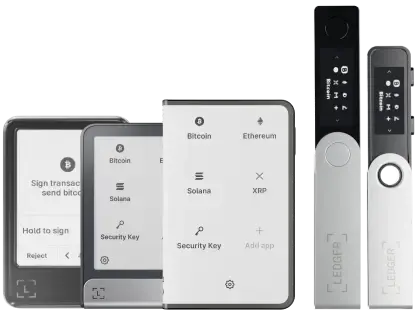
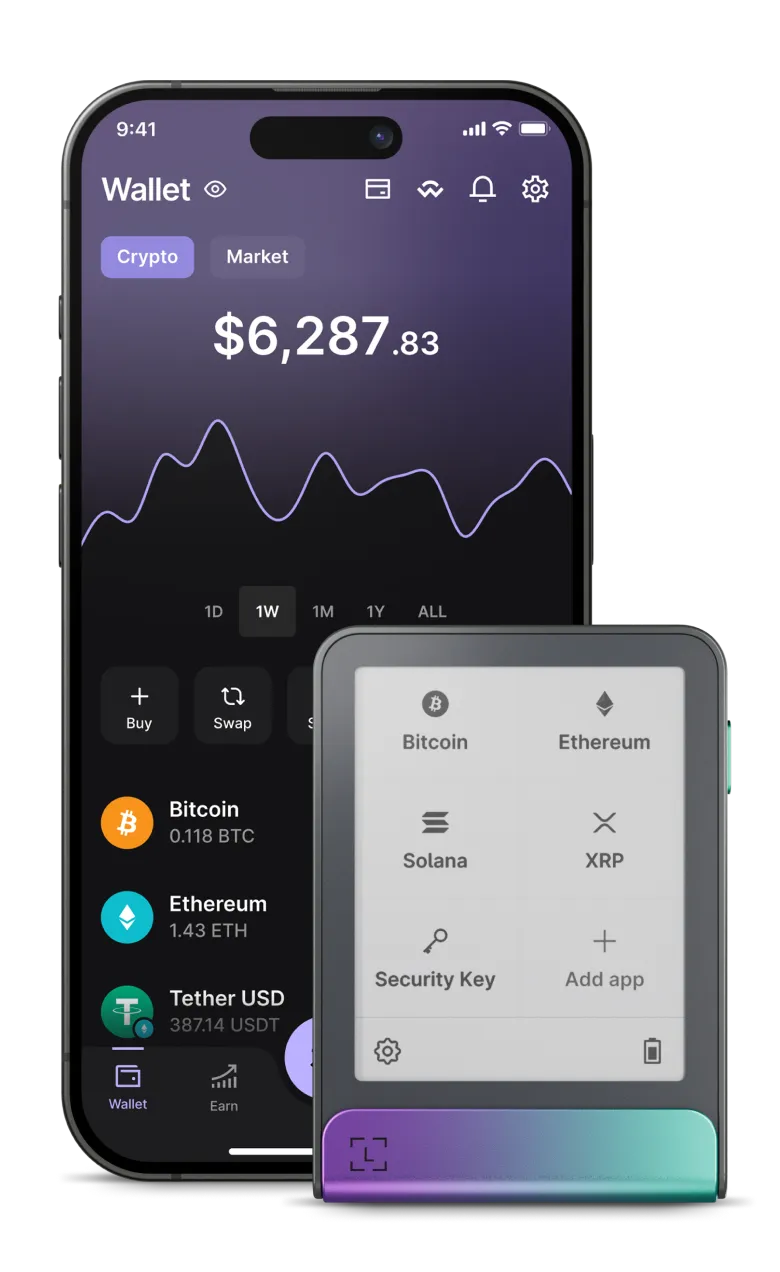
Ledger hardware wallet saves your private keys offline and thus makes your crypto assets inaccessible for anyone except you in the event of a computer hack


Ledger Live app gives the option to manage 1800+ coins and tokens from a phone or desktop, making the system extremely convenient. Although it’s currently not possible to purchase EOS on Ledger Live, you can still securely store, send/receive, and stake EOS. Here’s how you can do it:


  1. Get a Ledger hardware wallet.
  2. Download and install Ledger web or mobile application.
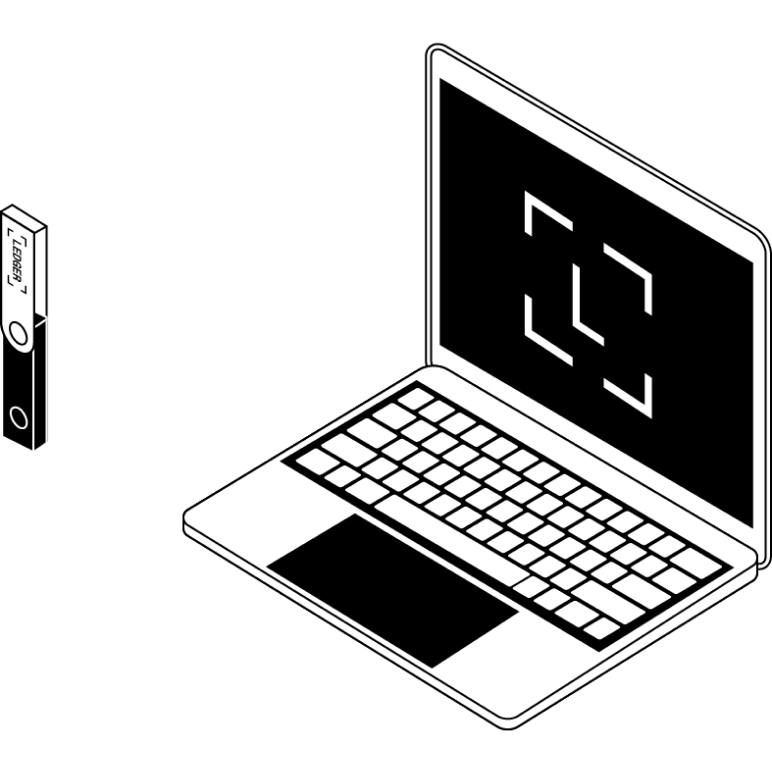
  3. Connect the Ledger app with the Ledger hardware wallet.
  4. Install the EOS application from the app catalog.
  5. Send/receive and stake EOS tokens.

Ledger Wallet™
the all-in-one crypto app

Your assets. Your rules. Your future.

Available on Mobile & Desktop
Top up with ease

Top up with ease

Choose how you want to fund your accounts: Buy, Sell, Send, Receive.

Connect to dApps

Connect to dApps

Confidently navigate the DeFi landscape from a single secure space.

Diversify your assets

Diversify your assets

Swap securely across chains, CEX, DEX. Compare providers with clarity.

Grow your portfolio

Grow your portfolio

Put your crypto to work for you by staking. Earn cashback by shopping worldwide.

Ledger Wallet™ the all-in-one crypto app

Stay in touch

Announcements can be found in our blog. Press contact:
[email protected]

Subscribe to our
newsletter

New coins supported, blog updates and exclusive offers directly in your inbox


Your email address will only be used to send you our newsletter, as well as updates and offers. You can unsubscribe at any time using the link included in the newsletter. Learn more about how we manage your data and your rights.