
HOLIDAY SEASON: Save up to 50% and get up to $90 BTC on the best deals of the year

Shop now


$

%
Rank
Price $ %
Volume(24h) $
Market cap $

PRICE USD CHART

price today

The price of () today is $, which has a variation of % over the last 24 hours. The 24 Hour Trading Volume of is $

Market Cap

The current Market Cap ranking of is #, with a live market cap of $.

What is the all time high?

hit an all time high of $.

With a price of $ today, () is % from all time high.

What is the all time low?

had an all time low of $.

With a price of $ today, () is % from all time low.

Frequently Asked Questions

Ethereum Classic is a decentralized computing platform on top of which smart contracts can be executed, enabling the development of decentralized applications. The team working on Ethereum Classic believes that ETC is uniquely positioned as the smart contract platform of the future since it combines the technology of ETH with the philosophy of BTC.

Ethereum Classic (ETC) is the original Ethereum blockchain. After the DAO hack, it was split from the Ethereum blockchain in July 2016 via a hard fork. Post the split, we got two separate blockchains, one being Ethereum Classic, which follows the same roadmap initially set for Ethereum, and the other being Ethereum, which continues to be developed by the Ethereum Foundation under an updated roadmap. 

ETC is the native token of the Ethereum Classic blockchain. It has a maximum supply of 210,700,000 coins. Ethereum Classic users pay fees in ETC to execute smart contracts, similar to Ethereum and its native unit ETH. These costs are commonly referred to as gas fees, and they are paid to miners who use advanced computers to solve “proof-of-work” problems to help validate the network. The Ethereum Classic blockchain issues new ETC to the circulating supply to reward miners for adding new transactions to the blockchain.

Most of the original Ethereum technological features and architecture were preserved in Ethereum Classic (ETC). Thus, Ethereum Classic still runs as an account-based blockchain that consists of external accounts and contract accounts. The external accounts are controlled with a user’s private keys and can create and sign messages. On the other hand, contract accounts are managed by the contract code and used only to conduct transactions as a response to a message. These contract accounts are what we call smart contracts. They enable the development and programming of decentralized applications (dApps) on the Ethereum Classic blockchain.

Ethereum Classic continues to use the original Ethereum Virtual Machine (EVM). Additionally, it also employs the Ethash proof-of-work (PoW) algorithm, and on average, new blocks are created every 15 seconds. Unlike Ethereum, Ethereum Classic has no intentions of switching to a proof-of-stake (PoS) mining process, and numerous developers are still working on future network enhancements.

The creation of Ethereum Classic sparked debate within Ethereum’s development community, as it was developed in reaction to a massive DAO hack of the main Ethereum network. The DAO raised $150 million in ETH as an Ethereum-based venture fund in an Initial Coin Offering (ICO) in April 2016. However, in June, an attacker exploited a bug in the DAO’s smart contracts and stole 3.6 million ETH.

Because The DAO accounted for so much of the total Ethereum in circulation in 2016, there was a split in the community about how to fix the problem. One camp believed that it was necessary to wipe off the attack from Ethereum’s history by reverting the chain so that they could maintain the network’s long-term viability. However, the opposing side argued that doing so was not in line with the ethos of cryptography and thus refused to support a ledger rewrite. Ultimately, the Ethereum developers decided to create Ethereum Classic as a hard fork from Ethereum in July 2016.

A group of hackers took the majority control of the Ethereum Classic blockchain in January 2019. Such an attack is known as a 51% attack. The group, however, returned the funds to the Ethereum Classic community. In August 2020, the Ethereum Classic network fell victim to another 51% attack.

The Ethereum Classic network is secured with a proof-of-work algorithm, but as a minority chain, it has suffered regular attacks itself. The Ethereum Classic blockchain has fallen victim to two 51% attacks where the hackers managed to take over control of the blockchain’s mining hash rate. This enabled the hackers to execute false transactions and double spend tokens to exploit the blockchain. However, such 51% attacks are uncommon in the crypto ecosystem. 

Most online theft and fraud are conducted not by attacking the blockchain network but by targeting users’ online/hot wallets to expose their private keys. Such malicious actors trick users into revealing their private keys or attack systems with malware.

Hardware/cold wallets overcome this vulnerability by storing private keys in physical storage devices cut off from the web and, therefore, out of the reach of malicious actors.

Widely used cryptocurrencies like Ethereum Classic (ETC) are available on many centralized exchanges (CEXs) and decentralized exchanges (DEXs). CEX users compromise complete ownership over their crypto assets, as they do not have access to the private keys of the wallets holding their funds. Most CEXs also require KYC information these days, which is not ideal for people seeking privacy over their online activity.

DEXs are ideal for investors who prefer privacy and ownership over their assets. However, there are still some loose ends on the security front when online wallets are used, as they may expose private keys resulting in thefts and frauds. 

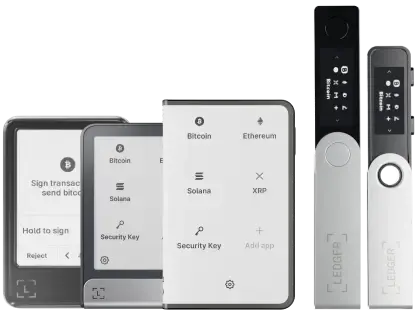
A Ledger hardware wallet keeps your private keys offline and thus makes your crypto assets inaccessible for anyone except you in the event of a computer hack

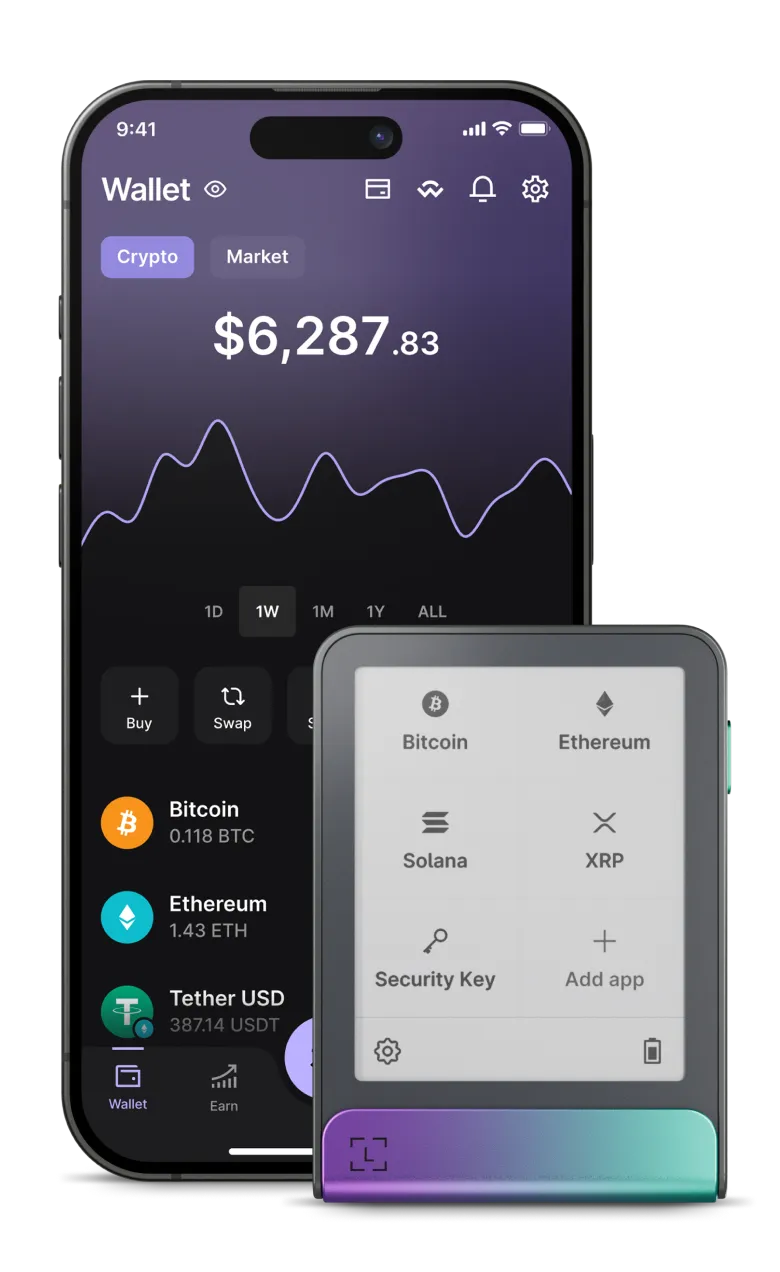
The Ledger Live app gives the option to manage 1800+ coins and tokens from a mobile or desktop, making the system extremely convenient. The provision to use a PayPal account or Debit/Credit Card to purchase ETC offered by Ledger is also extremely useful for new users. Follow the simple steps below to purchase ETC on a Ledger wallet:

  1. Get a Ledger hardware wallet.
  2. Download and install Ledger web or mobile application.
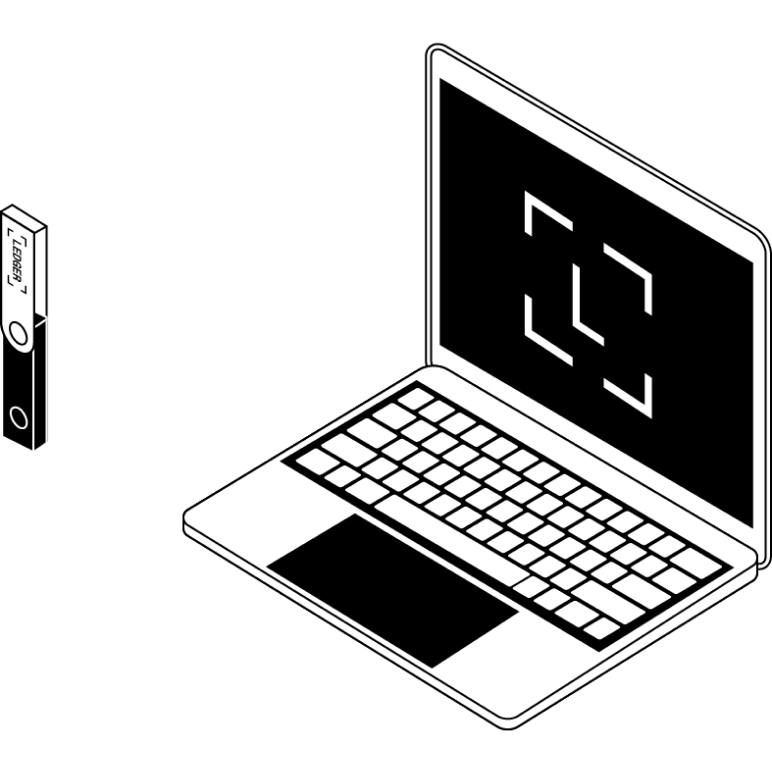
  3. Connect the Ledger app with the Ledger hardware wallet.
  4. Install the Ethereum Classic application from the app catalog.
  5. Install the Ethereum application, as Ethereum Classic requires it.
  6. Start buying ETC using Ledger Live.

Users also can swap or trade ETC on Ledger Live for other cryptocurrencies for a dynamic and diversified portfolio that maximizes returns. The hundred swap pairs available on Ledger can be accessed as follows:

  1. Get a Ledger hardware wallet. 
  2. Download Ledger Live.
  3. Install the ‘Exchange’ application on Ledger Live, along with the applications for the coins you wish to swap.
  4. One must-have ETC in the linked hardware wallet to facilitate the swap. 
  5. Once there are sufficient assets in the wallet, swapping is possible.


Ledger Wallet™
the all-in-one crypto app

Your assets. Your rules. Your future.

Available on Mobile & Desktop
Top up with ease

Top up with ease

Choose how you want to fund your accounts: Buy, Sell, Send, Receive.

Connect to dApps

Connect to dApps

Confidently navigate the DeFi landscape from a single secure space.

Diversify your assets

Diversify your assets

Swap securely across chains, CEX, DEX. Compare providers with clarity.

Grow your portfolio

Grow your portfolio

Put your crypto to work for you by staking. Earn cashback by shopping worldwide.

Ledger Wallet™ the all-in-one crypto app

Stay in touch

Announcements can be found in our blog. Press contact:
[email protected]

Subscribe to our
newsletter

New coins supported, blog updates and exclusive offers directly in your inbox


Your email address will only be used to send you our newsletter, as well as updates and offers. You can unsubscribe at any time using the link included in the newsletter. Learn more about how we manage your data and your rights.